
5 Reliable Ways to Increase Your Home’s Value

For most homeowners, a house is more than a place to live—it is also one of their largest financial assets. Whether you are thinking about selling your home in the next year or plan to stay for another decade, the right improvements can help protect and increase that investment. The key is knowing where to spend your money. Some projects may make a home more enjoyable without adding much resale value, while others can improve appearance, functionality and buyer appeal at the same time. For homeowners looking for the most reliable ways to increase home value, five categories consistently stand out: curb appeal and landscaping, interior painting and cosmetic updates, kitchen remodeling, bathroom remodeling, and improvements that increase or modernize usable living space. The five ways we will cover in this article can reliably raise the value of a home greater than the money you put into it.

1. Improve Curb Appeal and Landscaping. You do not necessarily need a large construction budget to make your home more valuable. One of the least expensive places to begin is outside. Fresh mulch, trimmed shrubs, healthy grass, strategically placed plants and trees, pressure-washed concrete and a clean entryway can dramatically change a buyer’s first impression. Repainting faded exterior surfaces, updating exterior lighting or replacing an old front door can take curb appeal another step further. Current resale research also shows strong value associated with certain exterior improvements, including entry doors and siding. These projects work because buyers begin forming an opinion about a property before they ever walk through the front door.
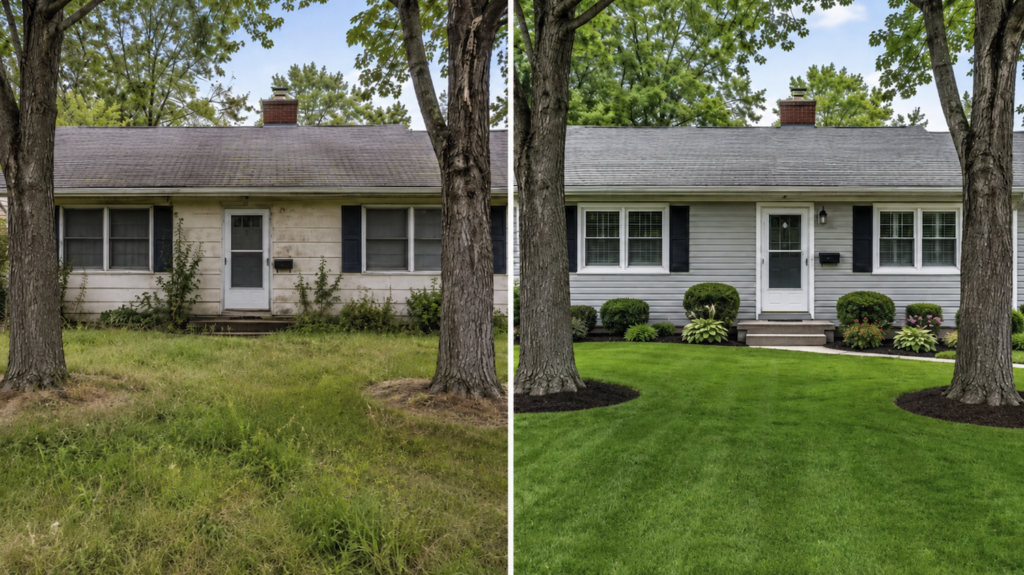
2. Use Paint and Cosmetic Improvements to Make the Home Feel Newer. A fresh coat of paint remains one of the simplest ways to transform an older or heavily lived-in home. Neutral, modern colors can make rooms feel cleaner, brighter and larger without requiring structural work. Homeowners can also replace dated light fixtures, cabinet hardware, faucets, switches and worn trim to create a more updated appearance at a relatively modest cost. The goal is not necessarily to make every room look brand new—it is to eliminate the small visual clues that make buyers feel a house needs immediate work. Cosmetic improvements are particularly valuable when several small upgrades are completed together, giving the entire home a more consistent and well-maintained appearance.
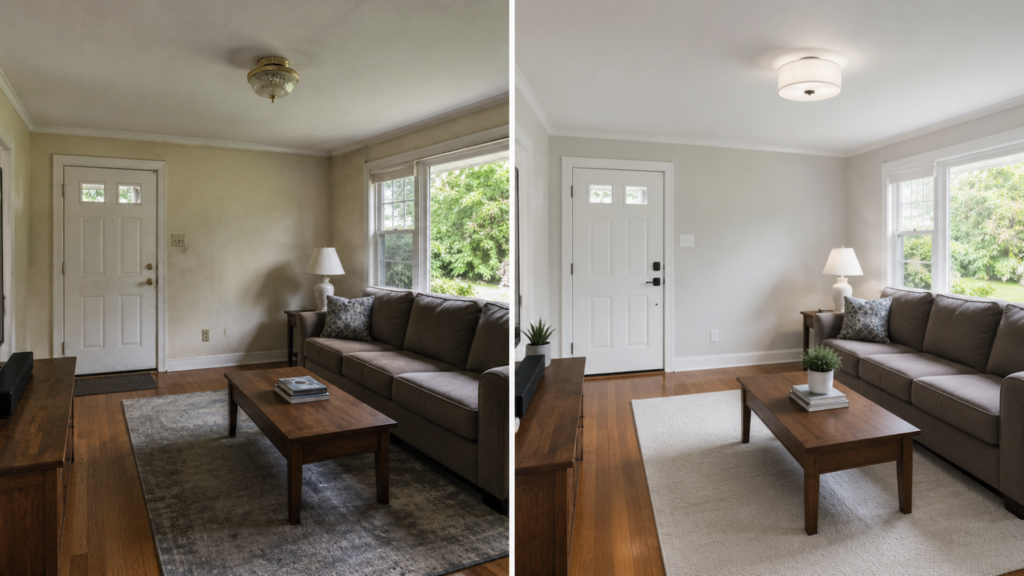
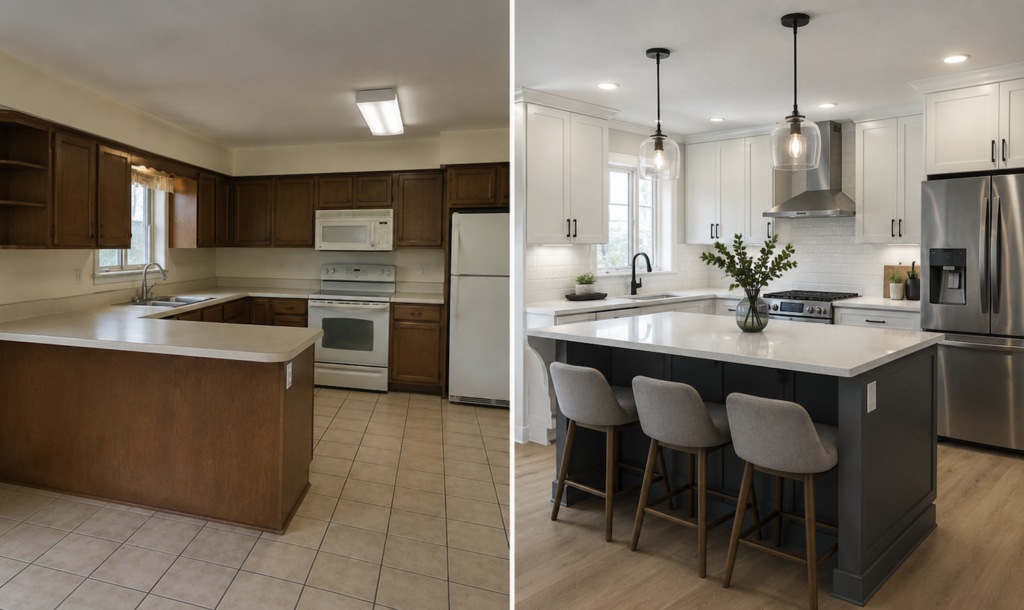
3. Remodel the Kitchen. If there is one room where homeowners should seriously consider investing beyond cosmetic improvements, it is the kitchen. Kitchens have become central gathering spaces, and buyers often pay close attention to cabinets, countertops, storage, lighting, appliances and the overall layout when comparing homes. A kitchen remodel does not always mean completely removing everything and starting over. Depending on the condition of the room, homeowners may see substantial improvement by replacing countertops, updating cabinet doors, installing new flooring or backsplash, improving lighting and upgrading appliances. Homes with very dated kitchens, poor layouts or inadequate storage may benefit more from a complete kitchen remodeling project that improves both appearance and functionality. The National Association of REALTORS® continues to identify both complete kitchen renovations and smaller kitchen upgrades as projects that can recover a meaningful portion of their cost when a home is sold.
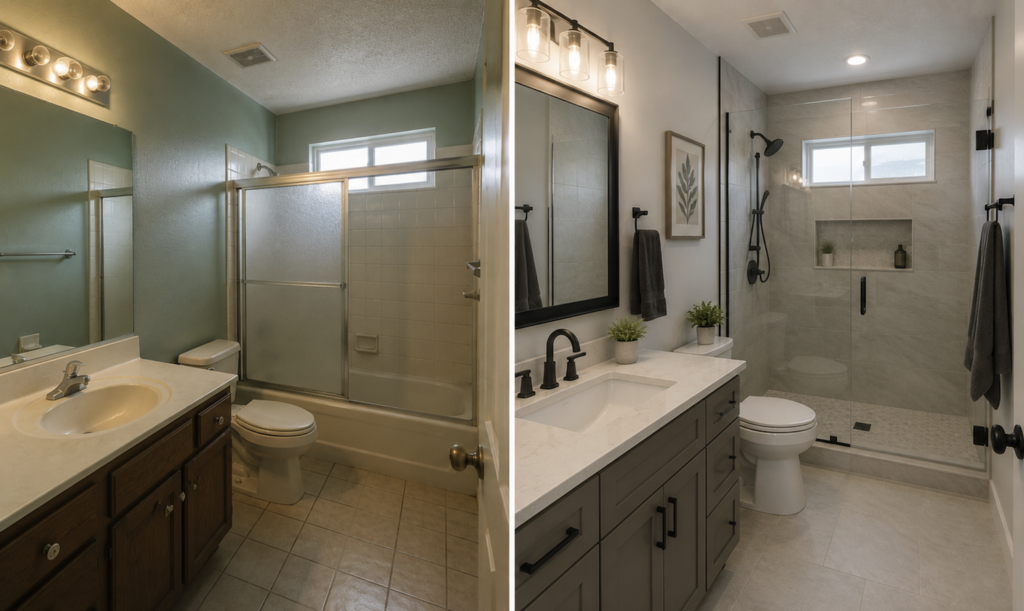
4. Remodel Outdated Bathrooms. Bathrooms are another area where condition and design can strongly influence how buyers perceive an entire home. Old tile, worn countertops, outdated cabinets, poor lighting or an aging tub and shower can make an otherwise attractive house feel older than it actually is. A bathroom remodel can range from replacing fixtures, mirrors, lighting and countertops to completely rebuilding the shower, installing new flooring and cabinetry, improving storage or converting an outdated tub area into a larger modern shower. Because bathrooms are used every day, the benefits of remodeling are not limited to resale value—the homeowner gets to enjoy the improvement immediately. NAR’s remodeling research continues to identify bathroom renovations and bathroom additions among projects capable of recovering a significant portion of their cost at resale.
5. Increase or Improve Usable Living Space. Homes generally become more attractive when buyers can clearly see how every part of the property can be used. Converting an underused room into a home office, improving a poorly designed living area, finishing an attic or other suitable space, or creating a more functional open living environment can increase the usefulness of the property without necessarily increasing its footprint. Larger projects may include room additions, expanding a primary bedroom suite or redesigning walls and doorways to create a better floor plan. The important distinction is between simply adding square footage and adding useful, well-designed living space. NAR research has identified projects such as basement and attic conversions, primary-suite additions and other living-area improvements as renovations that may recover a substantial portion of their investment at resale.
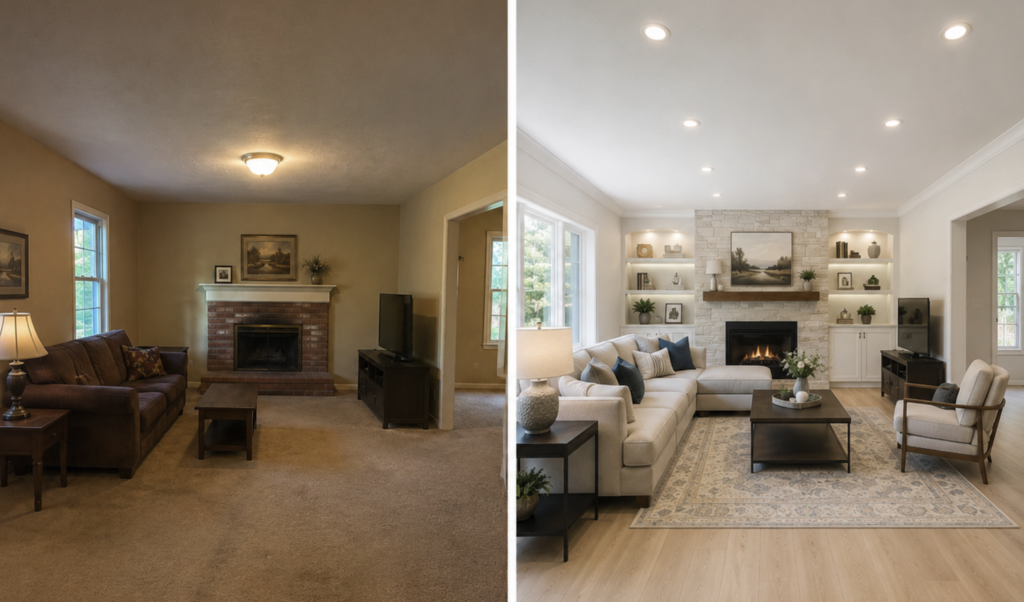
Homeowners should also think about value in relation to the rest of the neighborhood. Installing extremely expensive finishes in a moderately priced home does not automatically mean buyers will pay enough to recover the investment. Remodeling tends to make the most financial sense when it corrects something buyers would otherwise view as outdated, damaged or functionally inferior to comparable homes. That might mean modernizing a 1990s kitchen, replacing an aging shower, improving worn flooring or redesigning a room that simply does not work well. Choosing materials and designs that are attractive but broadly appealing can help homeowners avoid spending money on highly personal features that a future buyer may not value. Zillow likewise cautions that remodeling decisions should be balanced against the home’s overall value and the likely return from the finished project.
Maintenance should be part of the equation as well. A beautiful kitchen will not completely overcome concerns about obvious water damage, deteriorated siding, damaged flooring or other deferred maintenance. Before investing heavily in visible improvements, homeowners should address problems that could cause a buyer or home inspector to question the condition of the property. Once those fundamentals are handled, remodeling becomes an opportunity to move beyond simply maintaining the home and begin improving its market position. This is where professionally planned projects can have an advantage: good remodeling combines appearance, durability, functionality and workmanship rather than focusing on decoration alone. The original HomeAdvisor guidance similarly emphasizes exterior condition, usable space, kitchens, flooring and professional execution when undertaking larger value-oriented improvements.
Ultimately, the best home improvements accomplish two things at once: they make the house more enjoyable today and make it more desirable to the next owner tomorrow. Landscaping and paint can provide noticeable improvements for relatively little money, while a thoughtfully designed kitchen remodel, bathroom remodel or larger home renovation can fundamentally change the way a house looks, feels and functions. For homeowners in the Greater Houston area considering which improvements make sense for their property and budget, Northstar Construction can help evaluate remodeling options and develop a project focused not simply on making a home different, but on making it better. The most valuable renovation is usually one that solves a real problem, improves everyday living and creates an improvement future buyers can immediately recognize.